Issuing unit
Central Radio and Television Headquarters (Financial Program Center)
support unit
The State Council SASAC
All-China Federation of Industry and Commerce
Institute of Economics of Chinese Academy of Social Sciences
china enterprise reform and development society
Academic support
Responsibility cloud research institute
June 13th, 2023
introduction
"Environmental, Social and Governance" (ESG) is an enterprise management concept and investment concept put forward by the United Nations in 2004, which emphasizes the coordinated development of economy, environment and society and gives full play to the power of capital to solve social and environmental problems. In the past two decades, ESG concept has been widely practiced and promoted by governments and market players around the world, and has become one of the mainstream investment concepts and practical strategies in developed countries and emerging market countries. According to the prediction of relevant institutions, by 2025, the global ESG assets will reach 53 trillion US dollars, accounting for 1/3 of the global asset management scale. With the deepening of the global consensus on sustainable development, the requirements of society for enterprises in green development, energy conservation and emission reduction, social responsibility, honest management and compliance management are becoming more and more strict. Promoting ESG practice has become an inevitable choice for enterprises in the new era, which will help enterprises to form differentiated competitive advantages and help the world to make positive changes.
As the second largest economy in the world, China has been promoting the practice of ESG with a positive attitude in recent years. Since the 19th National Congress of the Communist Party of China, China has attached great importance to the modernization of harmonious coexistence between man and nature, and firmly promoted green and low-carbon development. The 20th National Congress of the Communist Party of China put forward the great goal of building a socialist modern country in an all-round way and comprehensively promoting the great rejuvenation of the Chinese nation with Chinese modernization. At present, China is in a critical period of building a socialist modern country in an all-round way and realizing the great rejuvenation of the Chinese nation. Based on the new development stage, implementing the new development concept, building a new development pattern and promoting high-quality development are the tasks that must be grasped at present and in the future. The value core of economic prosperity, environmental sustainability and social equity advocated by ESG is highly compatible with China’s important strategic goals such as high-quality development, common prosperity and "double carbon". These important strategic objectives have explored the road, pointed out the key points and deepened the content for the practice of ESG concept in China, and provided a grand stage for the development of ESG in China. Whether the "double carbon" goal focuses on the environment, rural revitalization emphasizes social equity, or common prosperity pays comprehensive attention to economy and society, it provides rich connotations and broad space for ESG’s practice in China. It is imperative to build an ESG system with China characteristics, improve China’s influence and voice in the global ESG system, and make a clear direction for the future development of ESG.
In order to thoroughly implement the spirit of the 20th Congress of the Communist Party of China, practice the responsibility of mainstream media, promote the construction of ESG system with China characteristics, and enhance China’s influence in the global ESG field, the Central Radio and Television General Station, together with the State-owned Assets Supervision and Administration Commission of the State Council, the All-China Federation of Industry and Commerce, the Institute of Economics of the Chinese Academy of Social Sciences, and the China Enterprise Reform and Development Research Association, launched the "China ESG (Corporate Social Responsibility) Release" and the model ceremony project in 2023. By establishing an ESG evaluation system that is in line with international standards and national conditions, we will comprehensively evaluate the listed companies in China that have great influence on China A-shares and Hong Kong stocks, publish thematic reports of different dimensions one after another, summarize and publicize the excellent practices of ESG, and hold the annual ceremony of "China ESG Model" at the end of the year, in a matrix form throughout the year, to convey the voice of responsibility and spread the value contribution, guide China enterprises to improve the ESG construction level with the power of example, and provide assistance for the high-quality economic and social development of China. Through this project, we are committed to leading more China enterprises to the road of high-quality sustainable development, taking ESG as the inevitable requirement of the new era, and pushing the society towards a future of harmonious coexistence and long-term common prosperity between man and nature.
We can see that under the guidance of the national strategy, China enterprises have started a new era of actively responding to the ESG concept and comprehensively improving their ESG level. "China ESG (Corporate Social Responsibility) Release: Annual ESG Action Report" is the first achievement in the year. It is found that the overall level of ESG development of large companies in China and the proportion of outstanding enterprises are comparable to those of large enterprises in the world, and the leading enterprises in various industries lead the sustainable development. At the same time, more and more enterprises attach importance to ESG. Many enterprises gradually establish an ESG management system, integrate ESG management requirements into business management, issue ESG reports in time, actively respond to national strategies, ensure information security, promote scientific and technological innovation, implement the "double carbon" goal, participate in charity, protect employees’ rights and interests, and help sustainable management and value creation with a heavy sense of responsibility. It can be predicted that practicing ESG concept and promoting sustainable development will become the "proposition of the times" and "value consensus" of China enterprises. Under the wave of ESG, China’s ESG regulatory policy has been gradually improved, ESG rating has been continuously optimized, ESG investment has continued to grow, and China’s ESG system construction has made positive progress. China enterprises will certainly be able to move forward bravely in the process of promoting Chinese modernization, providing strong support and guarantee for serving people’s better life and helping high-quality and sustainable economic and social development.
technical proposal
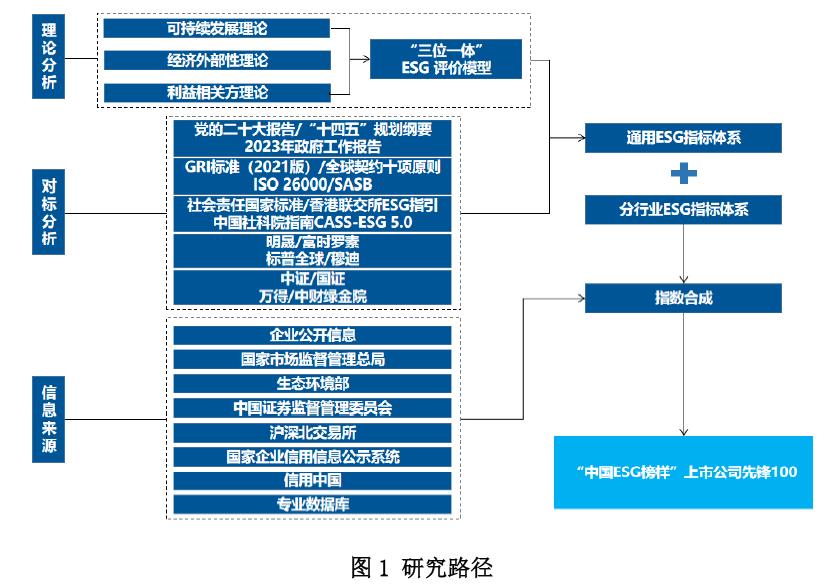
The research path is as follows: based on the theory of sustainable development, economic externality and stakeholder theory, construct the "trinity" ESG evaluation model of environment, society and governance; Seriously study the Party’s Report to the 20th CPC National Congress spirit, study domestic and international standards and guidelines, benchmark the mainstream ESG rating system at home and abroad, and build an ESG evaluation index system that is in line with international standards and national conditions; Collect enterprise ESG information based on open channels, conduct content analysis and quantitative analysis, calculate ESG index score, select "Pioneer 100" enterprises of ESG listed companies in China (hereinafter referred to as "Pioneer 100" enterprises) with perfect ESG governance, strong practice and remarkable results, and complete "China ESG (Corporate Social Responsibility) Release: Annual ESG Action Report" (see Figure 1).
I. Theoretical model
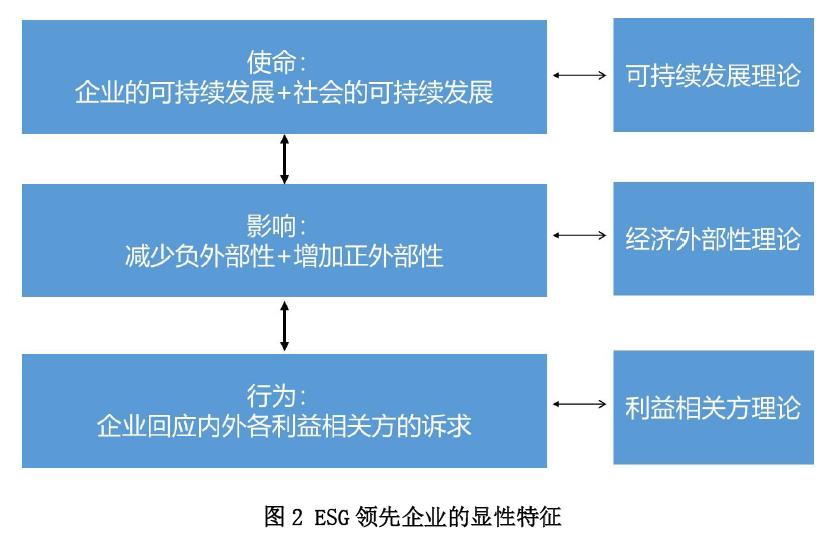
Theory of sustainable development: The production and operation of enterprises should pay attention to environmental and social influences, and pursue development that not only meets the needs of contemporary people, but also does not harm the ability of future generations to meet their needs.
Economic externality theory: negative externalities will make enterprises face policy risks, while positive externalities will enhance enterprise value and bring reputation assets to enterprises. Enterprises adhering to the ESG concept will reduce their negative externalities, increase their positive externalities, reduce the risk of losses and enhance the value of enterprises.
Stakeholder theory: Stakeholders are all individuals and groups that can affect the realization of an organization’s goals or are affected by the process of an organization’s realization of its goals. The interest expectation, interest conflict, interest balance and relative power of various stakeholders in an enterprise will affect the sustainable operation and value creation of the enterprise.
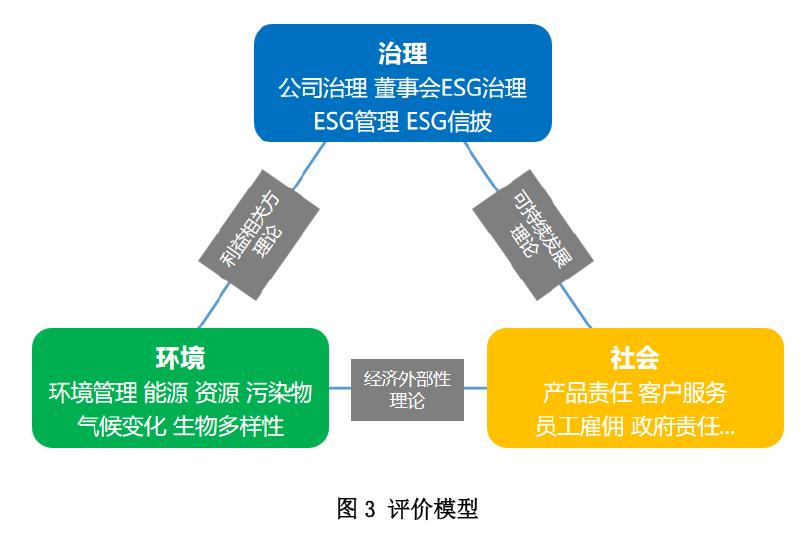
Based on this, when we build an ESG evaluation model, we break the conventional thinking that the existing mainstream ESG rating system focuses on ESG risk management (that is, the negative externalities of enterprises), and take into account the positive value and contribution of enterprise management and development to the social environment (that is, the positive externalities of enterprises), and innovatively build an ESG evaluation model that includes three dimensions of "environment, society and governance" and takes into account both risk management and social value contribution (see Figure 3).
Second, the index system
Under the guidance of the Party’s Report to the 20th CPC National Congress, the Outline of the 14th Five-Year Plan and the Government Work Report in 2023, we have thoroughly benchmarked 13 domestic and foreign ESG standards such as GRI Standards (2021 Edition) organized by Global Reporting Initiative, Guidelines on Environmental, Social and Governance Reports of the Hong Kong Stock Exchange, and morgan stanley capital international (MSCI), S&P Global, China Securities and China Securities. According to the principle of connecting with the international and applying to the local, the ESG evaluation topic is set, and the general index system and the sub-industry index system are refined. Based on this, a general index system including 3 first-level indicators, 19 second-level indicators and 127 third-level indicators is constructed. Among them, 63.78% of the indicators are in line with international standards, 92.13% are in line with relevant domestic standards, and 25.20% are social value indicators with local characteristics. The response to China’s characteristics is mainly reflected in the construction of modern industrial system, new industrialization, rural revitalization, coordinated regional development, "Belt and Road", innovation-driven, employment promotion, public crisis response, information security and public services.
At the same time, considering the great differences in the importance of ESG risk issues in different industries, in order to ensure the scientificity of evaluation, the ESG index system of different industries is constructed according to the characteristics of national economy industry classification (GB/T 4754-2017).
Third, the evaluation sample
Taking more than 6,400 China listed companies with A shares and Hong Kong stocks as the sample pool as of April 30, 2023, we selected the top 30% companies in terms of market value and published ESG reports on April 30, and comprehensively screened them according to the influence of listed companies, ESG activity and other factors, and finally selected 855 listed companies as the evaluation targets.
IV. Sources of information
The sources of information mainly include the public information of enterprises in the current year and the third-party information.
1. Enterprise public information
Including annual ESG report, annual social responsibility report, annual sustainable development report, annual special report (including environmental report, public welfare report, rural revitalization report, overseas report, etc.) and annual report of enterprises.
2. Third party information
Including official websites such as State Administration of Market Supervision, Ministry of Ecology and Environment, China Securities Regulatory Commission, Shanghai Stock Exchange, Shenzhen Stock Exchange, Beijing Stock Exchange, National Enterprise Credit Information Publicity System, Credit China, and professional databases such as Wind and Dibo.
V. Exponential Synthesis
1. Weight setting
According to the differences of different industries’ impacts on the social environment, taking into account the international general principles and the local actual situation, the weights of the first, second and third level indicators of each industry are set.
2. Index scoring
Classify qualitative indicators and quantitative indicators, and assign points by judging whether there is or not, comparing and scoring relative values in the industry, etc.
3. Negative deduction
Consult experts’ opinions, judge the negative events of enterprises during the evaluation period, deduct points or "veto by one vote", and adjust the evaluation results.
VI. Grading
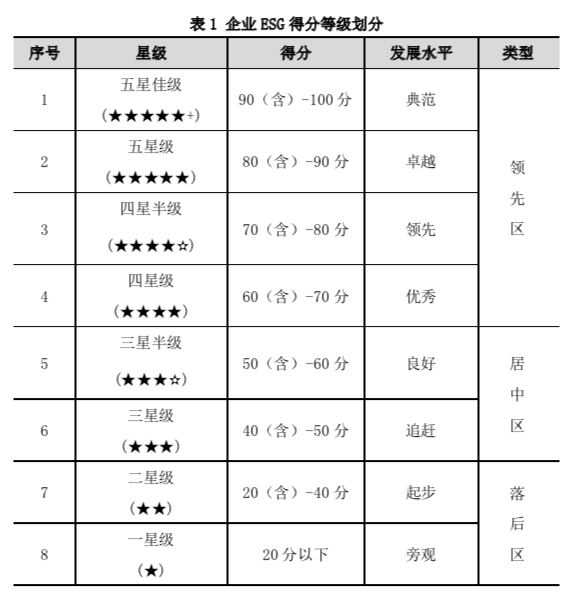
In order to intuitively reflect the ESG level of enterprises, the ESG index is divided into eight levels, namely, five-star excellent level, five-star, four-and-a-half-star level, four-star level, three-star level, two-star level and one-star level. See Table 1 for the corresponding star level and ESG development level of various enterprises.
"Pioneer 100 China ESG Listed Companies" Enterprise
Through analysis, 100 listed companies such as China Mobile, China Resources Power, China Petrochemical, baoshan iron & steel, Fosun International, Yili, China Ping An, Geely Automobile, Mengniu Dairy and Mindray Medical were selected as "Pioneer 100 of ESG Listed Companies in China".

Main findings of ESG action of China enterprises
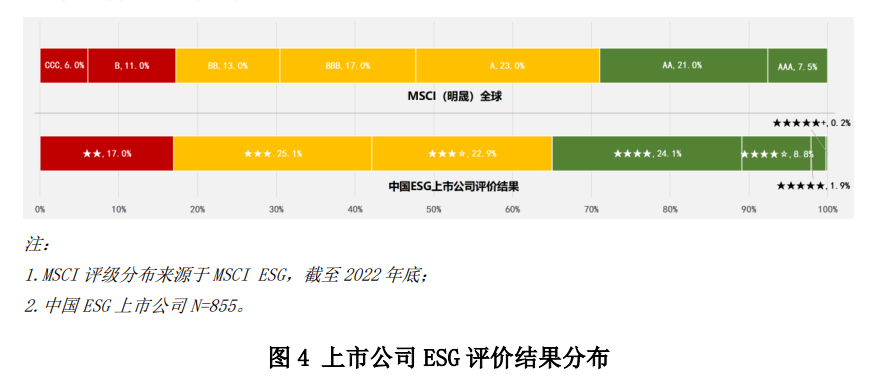
1.855 outstanding listed companies in China have the same ESG development level as the whole world, with 35% at the leading level.
Taking China listed companies with A shares and Hong Kong stocks as the sample pool as of April 30, 2023, 855 listed companies were selected as the evaluation objects according to the market value scale, report release, influence and ESG activity of listed companies, and ESG comprehensive evaluation was conducted. The analysis found that about 35% of the 855 enterprises have reached the leading level (MSCI global is 28.5%). 48% is in the middle level, and there is still room for improvement (MSCI global is 53%); Another 17% is at a backward level (MSCI is also 17% globally). To sum up, the development level of ESG of listed companies in China is comparable to that of global enterprises.
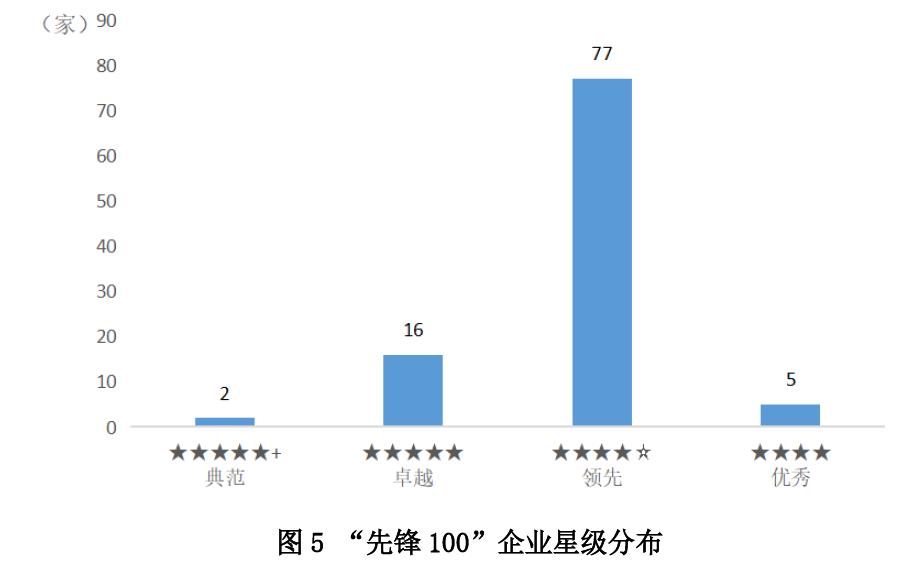
2. "Pioneer 100" enterprises lead the sustainable development, with an average ESG index of 75.8 points.
The average score of ESG index of "Pioneer 100" enterprises is as high as 75.8 points, which is at the leading level as a whole and leads the sustainable development of listed companies in China in an all-round way. Among them, two companies are at the level of five-star class, which is the model of ESG development of listed companies; 16 companies are at the five-star level, and they are outstanding in ESG development of listed companies; 77 companies are at the level of four-star and half-star, which is the leader of ESG development of listed companies; Five companies are at the four-star level and have excellent ESG overall performance. At present, ESG has entered a period of accelerated development in China. With the promotion of regulatory authorities, investment institutions, rating agencies, research institutions and other forces, the head listed companies have significantly improved their understanding of ESG and paid more and more attention to ESG work.
3. The development of ESG in state-owned enterprises is generally leading, and private enterprises in the head shine brilliantly.
Among the "Pioneer 100" enterprises, the number of state-controlled listed companies accounts for about 60%, and the average score of ESG index is 76.1; About 40% of private listed companies have an average score of 75.3 on ESG index. Judging from the number of "Pioneer 100", the ESG work of state-owned enterprises is generally leading, which is largely due to the high attention paid to ESG work by the State Council State-owned Assets Supervision and Administration Commission. Since 2021, the State Council State-owned Assets Supervision and Administration Commission (SASAC) has promoted the central corporate social responsibility work and ESG work as a whole. By 2022, a special social responsibility bureau was set up to further strengthen the promotion. Under the guidance of State-owned Assets Supervision and Administration Commission of the State Council, Guangdong, Shanghai, Shanxi, Sichuan, Yunnan and other local SASACs have also included ESG in their work, which has promoted the ESG work of state-owned enterprises to enter a period of accelerated development.
Although the number of private listed companies selected as "Pioneer 100" enterprises is less than that of state-owned enterprises, the average score of ESG index is almost the same as that of state-owned enterprises. Fosun International, China Ping An, Geely Automobile and Mindray Medical are among the top ten "Pioneer 100" enterprises, and their outstanding performance in ESG field provides a model for private listed companies to carry out ESG work.
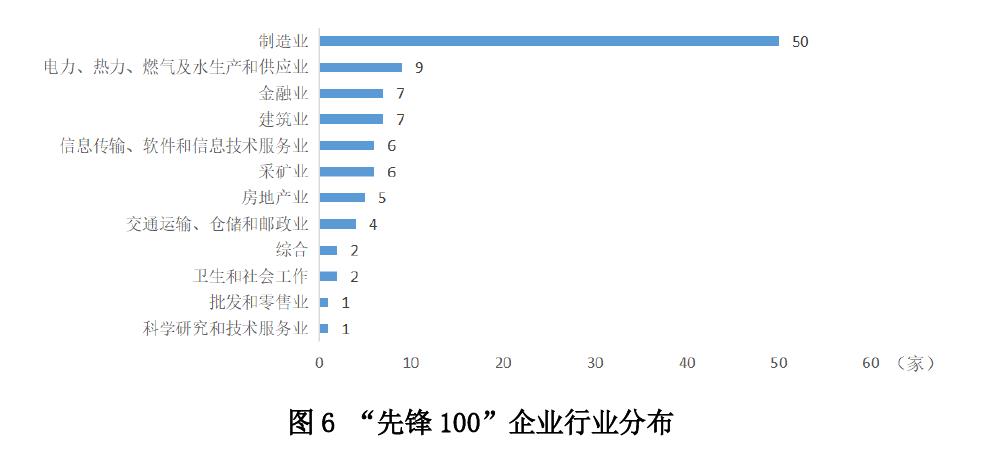
4. "Pioneer 100" enterprises are distributed in 12 industries, with manufacturing accounting for half of the country.
From the perspective of industry distribution, "Pioneer 100" enterprises are distributed in 12 industries, among which manufacturing enterprises account for half of the country, and five manufacturing enterprises rank in the top ten of "Pioneer 100" enterprises. Comparatively speaking, manufacturing enterprises often bear greater environmental responsibility, employee responsibility and safety responsibility. Fierce market competition and strict regulatory requirements, especially the proposal of "double carbon" goal, all push manufacturing enterprises to catch up, change their development concepts, prevent ESG risks and create ESG value.
Electricity, heat, gas and water production and supply industries account for about 10%. Some energy enterprises with great pressure on environmental protection and safety have incorporated ESG ideas into their business operations during the transformation process, thus boosting their sustainable development. For example, China Electric Power, a subsidiary of China Power Investment Group, is committed to establishing a good ESG risk management system to improve the performance of sustainable development issues and promote effective management, and its board of directors actively promotes a "top-down" culture to ensure that the management will incorporate ESG into the decision-making process and business operations. In addition, the number of enterprises in financial industry, information transmission, software and information technology service industry is also outstanding, which has set an example in ESG management and practice.
5. Beijing and Shenzhen have become the highland of ESG development, demonstrating the role of demonstration and driving.
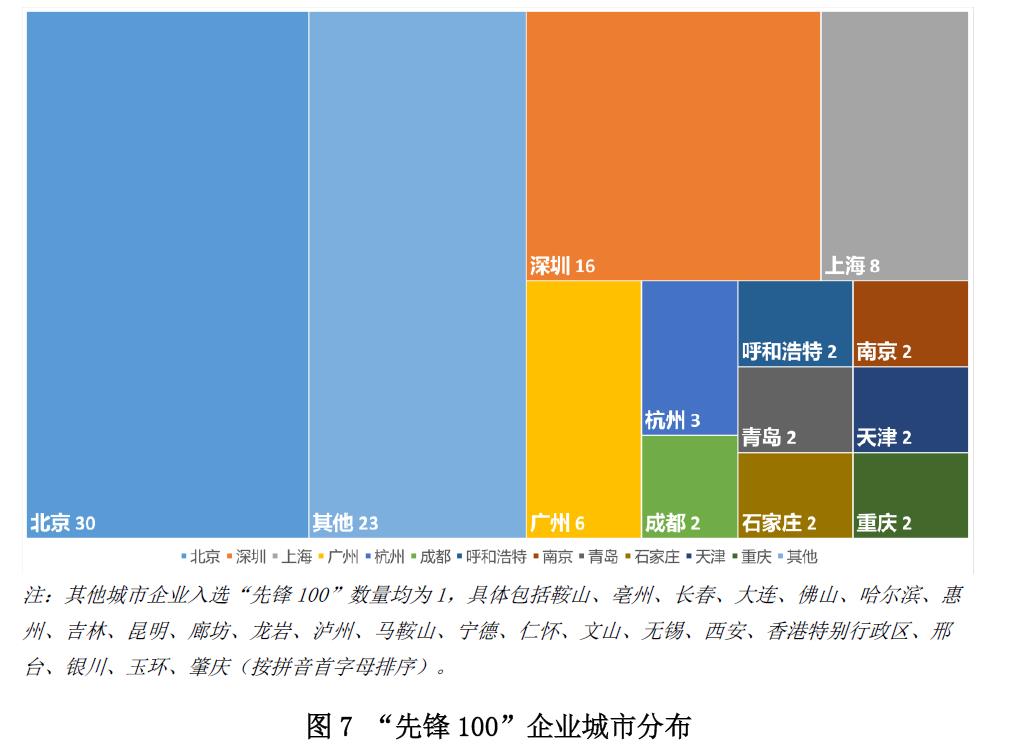
In terms of geographical distribution, nearly 80% of the "Pioneer 100" enterprises are concentrated in Beijing-Tianjin-Hebei, Guangdong-Hong Kong-Macao Greater Bay Area and the Yangtze River Delta, of which 36 are located in Beijing-Tianjin-Hebei, 26 in Guangdong-Hong Kong-Macao Greater Bay Area and 15 in the Yangtze River Delta. These areas are the frontiers of China’s opening to the outside world, and they are highly integrated with the world economy. Enterprises located here came into contact with the ESG concept originated in the West earlier, and ESG work started earlier, so ESG performed better.
From the perspective of cities, the proportion of "Pioneer 100" enterprises in Beijing, Shenzhen, Shanghai and Guangzhou has reached about 60%, with Beijing accounting for the highest proportion. Beijing (30), Shenzhen (16), Shanghai (8) and Guangzhou (6) are becoming the first demonstration areas for ESG construction.
6. China enterprises actively respond to national policies, and national strategies lead the development direction of ESG.
ESG can effectively guide important participants in the capital market to pay attention to social and environmental issues while creating economic value. Under the guidance of national strategies such as carbon neutrality and common prosperity, the construction of ESG system with China characteristics is accelerating. It is found that under the "top-down" system guarantee and policy promotion, the development direction of local ESG is clearer and the power is stronger. Our ESG evaluation system is based on local conditions and reflects ESG values with China characteristics. Ten characteristic indicators are specially set, including modern industrial system construction, new industrialization construction, rural revitalization, regional coordinated development, "Belt and Road", innovation-driven, employment promotion, public crisis response, information security, and public services, with a view to guiding listed companies in China to change their thinking, be inclusive, be brave and take action.
Taking the Belt and Road Initiative as an example, this initiative will help relevant countries to build a community of interests, destiny and responsibility with political mutual trust, economic integration and cultural tolerance, which is of far-reaching and lasting significance for maintaining world peace and stability and promoting prosperity and development. It is found that the large listed companies in China play a leading role and actively participate in building the "Belt and Road" through trade, investment, finance and infrastructure, thus contributing China wisdom and China’s strength to global sustainable development. For example, CRRC relies on the "Fuxing" Chinese standard EMU technology platform with the highest commercial operation speed in the world to tailor high-speed EMUs for Jakarta-Bandung High-speed Railway to adapt to the local operating environment and line conditions, showing the good image of China Railway, China Manufacturing and China Equipment; In the decade from 2013 to 2022, Northern International has signed more than 120 overseas projects to build rail transit, power facilities, petroleum and mineral facilities, municipal housing construction, agriculture and people’s livelihood and other infrastructure for countries along the Belt and Road.
7. China enterprises actively implement the "3060" goal and seek a green future by "carbon"
With the introduction and improvement of peak carbon dioxide emissions’s carbon-neutral "1+N" policy system, coping with climate change has been incorporated into the national strategy and top-level design. It is found that 26 "Pioneer 100" enterprises have formulated a special system to implement the "double carbon" goal, and nearly 90% have formulated goals, strategies, plans or action routes around the "double carbon" issue. For example, Dongfang Electric has formulated the "peak carbon dioxide emissions Carbon Neutralization Action Plan", set up a leading group for green environmental protection, and set up a carbon neutrality research center in peak carbon dioxide emissions to coordinate green and low-carbon development; Xinao Energy has formulated six major emission reduction actions: urban gas methane management, low-carbon trade and transportation, energy structure transformation of universal energy business, system energy efficiency improvement, green technology application and green office, and issued "Green Action 2030" to clarify the company’s short-term and medium-term carbon reduction targets by 2030 and long-term targets by 2050.
At the same time, more than 70% of the "Pioneer 100" enterprises disclosed their annual greenhouse gas emissions, especially the manufacturing enterprises with high environmental sensitivity, and the disclosure rate of greenhouse gas emissions reached 76%. According to statistics, the disclosure rates of carbon-related indicators in Europe, America and Asia-Pacific are 80%, 74% and 62% respectively. Green development and low-carbon development have been integrated into the development strategy of enterprises in China. Large enterprises actively implement new development concepts and accelerate the green transformation of development methods. The performance of ESG leading enterprises in China in coping with climate change has reached the international leading level.
8.ESG leading enterprises pay attention to work-life balance, with 9 paid annual leave per capita.
Employee responsibility is the core issue of social responsibility (S) dimension, and paid vacation is an important embodiment of employee rights and benefits, and it is also an important indicator under the topic of "work-life balance" that is of universal concern around the world. About 20% of the "Pioneer" 100 enterprises disclosed the number of paid annual leave days per capita. It is estimated that the average paid annual leave days per enterprise in 2022 will be about 9 days. It is particularly worth mentioning that the average paid annual leave days of CSDCC, China Resources Cement Holdings and Hegang reached 14 days, 13.6 days and 12 days respectively. Paying attention to the work-life balance of employees and solidly promoting the construction of harmonious labor relations are the common goals and pursuits of ESG leading enterprises.
9. Stable employment helps the economy to move forward. The average number of new jobs in "Pioneer 100" enterprises exceeds 10,000.
Under the background of the global economic downturn, rising unemployment rate and the rising trend of layoffs, absorbing employment reflects the responsibility and responsibility of enterprises. "Pioneer 100" enterprises take the initiative to attract new graduates, migrant workers, veterans and other key groups to find jobs, help laid-off employees to obtain new employment opportunities, and drive the upstream and downstream of the industrial chain to create a large number of employment opportunities. The data shows that more than 60 companies disclosed the number of employees they absorbed in 2022, totaling about 650,000, and the average number of employees absorbed by each company exceeded 10,000. For example, in 2022, the number of new employees in China Petrochemical Company was 20,891. In addition, ESG leading enterprises also take the initiative to shoulder their responsibilities and actively promote employment in the industrial chain. For example, Yili Co., Ltd. promoted the employment of dairy farming industry by 651,833 person-times.
10. Under the social dimension, China enterprises actively contribute to rural revitalization and charity, and private enterprises perform brilliantly.
Rural revitalization is an important strategy for China’s economic development and modernization, an inevitable choice for all people to achieve common prosperity, an important topic for the United Nations sustainable development 2030 goal, and an important measure for China enterprises to create social value. It is found that listed companies actively participate in rural revitalization, and help rural industries, talents, culture, ecology, organization and other comprehensive revitalization by participating in infrastructure construction, supporting characteristic industries, carrying out skills training, and setting up support funds. Among them, nearly 70% of the "Pioneer 100" enterprises disclosed the investment in rural revitalization in 2022, with a total investment of about 4.5 billion yuan and more than 2,800 projects. For example, in 2022, China Jiaojian invested 266 million yuan in free assistance funds in designated assistance areas; In 2022, Mengniu Dairy promoted the planting of more than 6 million mu and 12 million tons of high-quality forage grass in China, promoted the breeding of more than 1.7 million cows, and distributed nearly 32 billion yuan of milk, driving farmers to increase their income and become rich.
In addition to the investment in rural revitalization, it is an important action for enterprises to create social value and an active choice for enterprises to practice social responsibility. With the encouragement and support of the All-China Federation of Industry and Commerce, private enterprises have actively participated in glorious and public welfare undertakings, and made outstanding contributions to China’s characteristic public welfare undertakings. Statistics show that "Pioneer 100" enterprises invested more than 12.6 billion yuan in charity in 2022, among which 37 private listed companies invested more than 8.5 billion yuan in charity, and private enterprises performed brilliantly in charity donation. For example, Mindray Medical announced that it will invest 1 billion yuan to build a new campus for Dangshan Middle School to help the development of rural education.
11. Symbiosis with innovation, China enterprises promote sustainable development with technological innovation.
Technological innovation is the first driving force for the transformation of old and new kinetic energy of the economy and the realization of high-quality development. Accelerating the implementation of innovation-driven development strategy is not only the strategic requirement of the country, but also the internal demand of enterprises themselves, which is conducive to enhancing the sustainable development capability of enterprises and laying a solid foundation for industrial transformation and upgrading and sustainable development. The study found that the total investment of "Pioneer 100" enterprises in R&D in 2022 exceeded 500 billion yuan. From the industry point of view, the six selected enterprises in information transmission, software and information technology services all invested more than 10 billion yuan, far ahead; Geographically, the average R&D investment of enterprises in Beijing-Tianjin-Hebei region exceeds 9 billion yuan, ahead of Guangdong-Hong Kong-Macao Greater Bay Area, Yangtze River Delta, Western Triangle and other regions; From the perspective of cities, the average R&D expenditure of enterprises in Hangzhou, Ningde and Shenzhen ranks in the top three. "Pioneer 100" enterprises have vigorously promoted intelligent upgrading and green manufacturing, and have been at the forefront of the world in the fields of 5G information technology and clean energy equipment manufacturing. For example, China Mobile focuses on the frontier and urgent needs of the country, makes every effort to tackle key core technologies, takes the lead in setting up a 5G innovation consortium, shoulders the "chain length" of the modern industrial chain of mobile information, and actively helps China to become self-reliant in science and technology in the field of information and communication; Lenovo strategically increased its R&D professionals by about 5,000 in fiscal year 2021/22, and announced that it would add another 12,000 R&D personnel, while doubling its R&D investment in the next three years.
12.ESG leading enterprises attach great importance to information security and strictly abide by the bottom line of ESG responsibility.
In the era of big data, the problem of information security has become increasingly prominent, which has attracted worldwide attention. Ensuring information security is not only related to the interests of enterprises, but also their basic responsibility to practice ESG. It is found that more than 60% of the "Pioneer 100" enterprises have issued rules and regulations on information security, and nearly 40% have established information security management committees or working groups in their organizational structures. Some enterprises have invested in information security funds and conducted training to enhance the information security awareness of all employees. For example, the Agricultural Bank of China has formulated and implemented the Measures for the Management of Network Security, established a three-level network security organizational structure of "Science and Technology and Product Innovation Committee-Science and Technology Department-Professional Office", and set up data security centers in the head office and branches to closely weave digital security protection networks; Aauto Quicker has implemented strict data security management protocols, implemented user privacy protection, data classification, supervision, emergency response and third-party management, and established an information security committee to continuously strengthen information security and privacy risk management.
13. China enterprises adhere to the guidance of party building and improve ESG governance with China characteristics.
The core of the great innovation of corporate governance theory with China characteristics lies in strengthening the leadership of the Party, which is also the unique advantage of China enterprises in accelerating the construction of world-class enterprises. It is found that China enterprises embed the corporate party organization into the corporate governance structure, and establish and improve the corporate governance mechanism with China characteristics, which has its own responsibilities, coordinated operation and effective checks and balances, so as to promote the compliance construction of enterprises, enhance the awareness of sustainable development and promote ESG work. For example, China Tonghao continues to improve the party building cultural system of "one branch with one feature" and "one party member with one flag", and carries out in-depth practical activities on the theme of "strong vitality, creating good results and promoting growth", focusing on the entry point and force point for party building to integrate into production and operation, and ensuring the high-quality development of enterprises with high-quality party building; Cosl, a subsidiary of CNOOC, China, integrated the leadership of the Party into the whole process of corporate governance, fulfilled the pre-procedure of the Party Committee for making decisions on major issues, improved the corporate governance mechanism with the "three meetings and one layer" as the starting point, and promoted the modernization of corporate governance system and governance capacity.
14.ESG overturns the reform of executive compensation, and "Pioneer 100" enterprises actively explore the link between compensation and ESG performance.
With the gradual popularization and promotion of ESG investment concept around the world, the linkage between executive compensation and ESG performance has become a trend and may gradually become the norm. Some large foreign enterprises have urged the management and management to actively improve ESG performance by means of "linked compensation" assessment and incentives. According to statistics, in 2022, the proportion of companies linking ESG targets with executive compensation in Russell 1000 Index has reached 28%. The analysis of "Pioneer 100" enterprises shows that more than 20% of listed companies link management compensation with ESG, which urges management to promote the implementation of ESG. For example, baoshan iron & steel, a subsidiary of China Baowu, incorporated ESG performance indicators into the executive incentive and compensation plan, and took reward and punishment measures according to the annual ESG evaluation results; China Resources Land, a subsidiary of China Resources Group, has linked the executive compensation with the work of safe production in order to establish an effective and normalized sustainable development management system. Fosun International has established relevant mechanisms to link ESG performance with the remuneration of directors and senior management, among which "ESG assessment indicators" of executive directors (including ESG rating, ESG system construction, responsible investment management, carbon neutral management and ESG risk management) account for 10% of the overall performance assessment.
15. "Pioneer 100" enterprises focus on improving ESG management system to inject momentum into sustainable development.
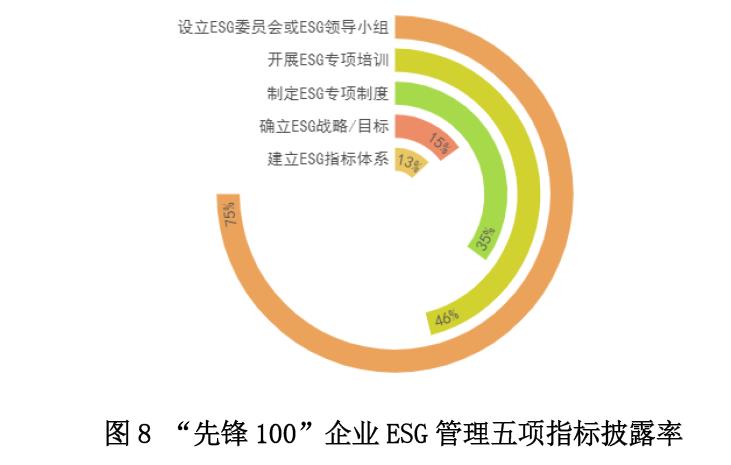
ESG management system is the foundation for enterprises to promote ESG work. Establishing and improving the normalization mechanism of ESG management can effectively guide enterprises’ ESG work and improve the quality of ESG information disclosure. It is found that about 75% of Pioneer 100 companies have set up ESG committees or ESG leading groups at the board level, which is much higher than 54% of FTSE 100 companies. Large listed companies increasingly realize that improving the top-level architecture is the key to promoting ESG work. At the same time, among the "Pioneer 100" enterprises, over 30% have established ESG special system, about one-seventh have established ESG index system, and nearly 50% have carried out ESG special training. More and more listed companies gradually standardize ESG management system, improve ESG management ability, promote practice through management, improve ESG work level and enhance the resilience of sustainable development. For example, State Grid Yingda, a subsidiary of State Grid, has established a four-level ESG organization and management system, including the board of directors, management team, and ESG implementation team. The chairman of the board is the highest person in charge of ESG work, actively participates in external ESG special series training, continuously improves the ESG index system, and optimizes ESG management; Guodian Power, a subsidiary of National Energy Group, set up an ESG management leading group as the leading organization, and formulated the Management Measures for Environment, Society and Corporate Governance to ensure the institutionalized and systematic operation of ESG.
16. ESG information disclosure of enterprises in China is becoming more and more standardized, and ESG reports are substantive, comparable and balanced.
ESG information disclosure is very important to promote the sustainable development of enterprises. By presenting the environmental, social and governance (ESG) behaviors of the enterprise completely, openly and transparently, the enterprise can win the trust of investors, attract more investment, and improve its brand image and social reputation. Mainstream international organizations, such as Global Reporting Initiative (GRI) and International Council for Sustainable Development Standards (ISSB), continue to improve ESG information disclosure guidelines to help standardize ESG information disclosure. The research shows that more than 95% of the ESG reports of Pioneer 100 enterprises list the relevant contents of substantive issues analysis to ensure that the core ESG issues are fully disclosed in the report. Nearly 80% of the ESG reports of "Pioneer 100" enterprises disclosed the key performance data for three consecutive years or more, effectively transmitting the improvement of ESG performance to the capital market. More than 90% of the "Pioneer 100" companies actively disclose many negative information such as environmental pollution, safety production, employee turnover, product recall, administrative punishment, etc., so as to avoid misleading the report readers and ensure the balance of ESG information disclosure. Half of the "Pioneer 100" companies’ ESG reports were evaluated by third-party reports, such as China Chemical, Maanshan Iron and Steel Co., Ltd. and Yiling Pharmaceutical Co., Ltd., which applied for the rating of enterprise ESG reports to promote management and continuously improve the level of report preparation. Based on the comparative analysis,We believe that high-level ESG information disclosure should meet the requirements of substance of the topic, comparability of data, balance of information, completeness of content, timely release and verifiability of reports. The standardization of ESG reports of Pioneer 100 enterprises has reached a high level, but it is still necessary to pay attention to the evaluation of third-party reports and improve the quality of ESG reports.
ESG Action Proposal of China Enterprises
At present, with the deepening of the national green and low-carbon strategy and the open development of the financial market, China’s ESG development has rapidly entered the "fast lane" and achieved certain results. However, compared with western developed economies, it still faces some problems such as insufficient understanding, imperfect rules, insufficient constraints, inadequate system and insufficient practice. As the main body of the capital market and the practice of ESG concept, enterprises should conform to the development wave of ESG, explore the compatibility of ESG localization with international rules, play a subjective role in investment and business, actively carry out ESG practice, and promote the rooting and healthy development of ESG concept in China. On the basis of systematically combing the development status of ESG of listed companies in China, we put forward the following suggestions on how to further improve the ESG work level of enterprises in China.
First, based on the national strategy, ESG helps high-quality economic and social development.
China’s unique historical background, social culture and economic system make it necessary for China to absorb the international ESG experience, integrate its own characteristics and combine with the national development strategy, so as to shape the ESG practice with China color. Only in this way can ESG become a powerful tool to promote the sustainable and high-quality development of enterprises and society in China.
First, we must deeply integrate into the national strategy.On the basis of defining its own position, enterprises should actively respond to and deeply participate in the national strategic objectives, and put their own development into the historical journey of promoting the great rejuvenation of the Chinese nation with Chinese modernization. For example, the innovation drive is deeply rooted in the core engine of ESG practice, and innovation empowers business models, products and services to form new development momentum; Make full use of resources, technology or industry status, actively participate in major national strategies such as "One Belt and One Road" and rural revitalization, promote coordinated regional development, and shape ESG practice with China characteristics.
Second, we should promote the construction of ESG ecology in the industry.Enterprises should not only fully participate in the construction of modern industrial system, but also actively promote the new industrialization development strategy and build a win-win cooperation industry ecosystem. Industry leaders need to take on greater responsibilities and form and promote ESG concepts and practices with industry characteristics through transformation and upgrading and coordinated development among industries.
Third, we must create high-quality people’s livelihood value.Enterprises should closely link products and services with people’s livelihood and well-being, actively create employment opportunities, promote community co-construction and sharing, contribute to charity, and help realize "common prosperity" of society, which has become a key force to promote the deeper and broader development of ESG practice in China.
Second, improve the level of practice and strengthen the supply chain ESG management
Enterprises in China should promote ESG practice with higher standards and a more rigorous attitude, and realize the balanced and sustainable development of economic, social and environmental benefits. Enterprises need to establish a strategic goal of comprehensively improving ESG practice level as the basic orientation of sustainable development of enterprises, fully consider the impact on the environment and society when making business decisions, and take corresponding measures to reduce potential adverse effects. At the same time, China enterprises also need to actively participate in the global ESG practice, learn from the best actions, and continuously improve their own ESG performance.
Supply chain management is an important topic in the development of ESG in the world. APEC and the European Union have successively issued a number of policies to require enterprises to pay attention to the supply chain risks related to ESG and improve the security, stability and sustainability of the supply chain. However, it is found that the proportion of "Pioneer 100 Enterprises" carrying out supply chain ESG review is low. China, as the core of the global industrial chain and supply chain, should shoulder its due responsibilities and drive the upstream and downstream enterprises in the industrial chain to create long-term sustainable value. In the management of supply chain, enterprises should integrate ESG standards into the compliance review of suppliers to ensure that suppliers meet the corresponding standards in environmental protection, social responsibility and corporate governance; We should also provide ESG training and technical support to suppliers on a regular basis, and help suppliers understand and implement ESG best practices by sharing knowledge and technology. In addition, enterprises should also establish long-term partnerships with suppliers to jointly face the challenges of ESG and help the whole industry upgrade ESG.
Third, improve corporate governance and enhance the "she" power in the top-level structure
Sound corporate governance is the key to achieve ESG goals, and an effective governance system can guide and promote enterprises to continuously improve on environmental and social issues. High-quality corporate governance has also been proved to improve the economic performance and risk management ability of enterprises, enhance the resilience to meet challenges and promote the long-term sustainable development of enterprises.
First, we must adhere to the guidance of party building.The leadership of the Party plays an important leading role in corporate governance. It is necessary to better transform the leadership advantage of the Party into governance efficiency, and integrate the leadership of the Party, corporate governance and ESG governance with each other, so as to enhance the "control power" of enterprise decision-makers on sustainable development and promote the in-depth development of enterprise ESG work.
Second, we should improve the ESG governance structure.Enterprises should establish a decision-making and leadership mechanism for ESG work at the board level, regularly analyze the risks and opportunities of the enterprise’s social environment, examine and approve the company’s ESG strategy and key work, and review ESG major issues. At the same time, under the leadership of the board of directors, an ESG work organization system composed of management and executive layer is established to realize the guidance and supervision of ESG work by management and the implementation of ESG work by executive layer.
Third, we must strengthen the power of "her".Gender equality is an important topic of the UN Sustainable Development Goal 2030. At the decision-making level and management level, the role of "she" power can not be ignored. The different views and experiences brought by female directors and executives are helpful to improve decision-making efficiency and promote enterprise value creation. However, it is found that the average proportion of female directors and female executives in Pioneer 100 enterprises is 16.7% and 20.2%, both of which are lower than those in developed markets. China enterprises need to improve the diversification of governance structure, actively increase the proportion of female directors and female executives, make good use of "her" power to improve decision-making efficiency and promote enterprise value creation.
Fourth, improve ESG management, pay attention to planning guidance and system construction.
An effective ESG management system can help enterprises form advantages in value creation, risk control and market competitiveness; Moreover, this kind of ESG management, which goes deep into all levels and business links of enterprises, can also guide enterprises to form endogenous motivation for social and environmental responsibilities and promote the simultaneous improvement of social and commercial values of enterprises. The action rate of "Pioneer 100 Enterprises" in establishing ESG strategic objectives, formulating ESG special system and establishing ESG index system is still low, which needs to be improved urgently.
First, make a clear ESG plan.Planning is an important tool for enterprises to define ESG objectives, set work paths and guide work implementation. Enterprises should combine their own business characteristics and market environment, set practical ESG work objectives, and formulate systematic and practical ESG action plans.
Secondly, we should establish and improve the ESG system.A good system can ensure that ESG planning is implemented and implemented in the daily operation of enterprises. Enterprises should build a "1+N" ESG system with ESG special system as the guide and multi-dimensional specific implementation methods such as environmental protection, product management, customer service, employee responsibility and supply chain management as the constituent elements, clarify the powers and responsibilities of various departments and posts for ESG work, and ensure that ESG concepts are implemented throughout the business process of enterprises.
Finally, we should build a scientific ESG index system.Enterprises should build a layered, graded and classified ESG index system suitable for the characteristics of industries and companies, provide quantifiable tools for issue identification, report preparation, risk management and performance evaluation, help enterprises to clarify responsibilities, monitor progress and evaluate effects, and promote fine management and continuous improvement of ESG work.
V. Improve the data disclosure rate, and release ESG related reports before April 30th.
ESG information disclosure is a comprehensive mapping of enterprise ESG management and practice level. High-quality ESG envelope can not only reduce the compliance risk of enterprises, but also help enterprises gain recognition from consumers, regulators and rating agencies. In recent years, the global requirements for ESG envelopes have become more and more stringent, so it is urgent for China enterprises to further improve the quality and timeliness of ESG envelopes.
The disclosure of ESG key data is the most important thing to improve the quality of ESG information disclosure. ESG data provides quantitative, clear and comparable information for investors, regulators and the public, enhances the public and investors’ trust in enterprises, and also helps enterprises find and understand the problems and shortcomings of ESG work. The selection of "Pioneer 100 Enterprises" attaches great importance to the performance of key data, and the evaluation system contains a large number of quantitative indicators. China enterprises should establish and improve the ESG data management mechanism to ensure the effective collection, storage and processing of data; It is necessary to improve the quality and comparability of ESG data disclosure and better reflect the status quo and trends of key indicators.
The timeliness of ESG report release is also crucial. Timely disclosure of ESG information helps investors and other stakeholders to compare and analyze the financial performance and non-financial performance of the company, so as to make timely and accurate investment decisions; It is also helpful for enterprises to discover and deal with ESG risks and opportunities that may be faced in time. In recent years, global regulators have gradually tightened the release time of ESG reports. The Stock Exchange of Hong Kong and Euronext have required that ESG reports of listed companies should be published simultaneously with annual reports. In combination with the requirement of China Securities Regulatory Commission that annual reports of listed companies should be compiled and disclosed within four months from the end of each fiscal year, April 30 is chosen as the deadline for the collection of ESG reports. Therefore, we suggest that listed companies in China should release ESG related reports of the previous year no later than April 30th every year, so as to improve the timeliness of report release. In addition, we should actively participate in the evaluation of third-party reports, improve the quality of ESG reports with the help of professional strength, and then force the improvement of ESG management and practice.
tag
"China ESG (Corporate Social Responsibility) Release: Annual ESG Action Report", as the first research achievement of "China ESG (Corporate Social Responsibility) Release" and model ceremony project in 2023, will provide a new perspective and guidance for China enterprises to implement ESG practice, followed by a series of thematic reports. At the end of the year, we will also hold the annual ceremony of "China ESG Model", select the top ten "China ESG Model" enterprises, and show their excellent ESG practice cases, with a view to establishing a clear social value orientation, promoting enterprises to continuously optimize ESG practices, and forming a good atmosphere for the whole society to pay attention to and promote ESG.
In the process of evaluation and implementation, we will always pay attention to the development trend of ESG at home and abroad, and adjust and update the ESG evaluation standards in time to ensure that they are always in line with international standards and national conditions, and accurately reflect the ESG performance of China enterprises. In this process, we will continue to promote the standardization and normalization of ESG in China, and strive to push ESG practice in China to the international level.
Finally, we sincerely hope that all enterprises in China can actively embrace and practice the ESG concept, constantly improve their own ESG level, carry out ESG practice in a down-to-earth manner, and show their responsibility.