Last rate hike? The Federal Reserve raised interest rates again, reaching the highest rate in 22 years.
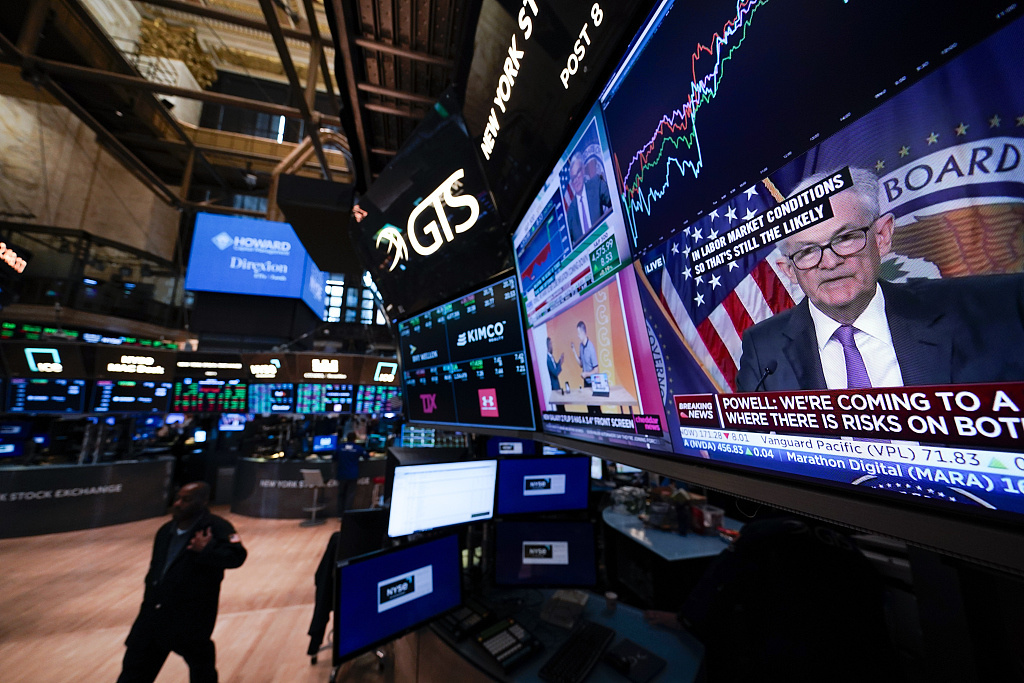
[Global Times correspondent in the United States Zheng Ke Global Times reporter Ding Yazhi Global Times correspondent Xin Bin] The US Federal Reserve announced a 25 basis point rate hike on the 26th local time, which is the 11th rate hike since March 2022. Federal Reserve Chairman Powell said at a news conference that he would evaluate inflation, employment and economic data before deciding on his next move. Fearing that high interest rates will lead to rising borrowing costs and hit the economy, many analysts believe that it is unlikely that the Fed will continue to raise interest rates this year. On the evening of 27th, the US Department of Commerce released the year-on-year growth data of real GDP in the second quarter, which exceeded market expectations. It is even more difficult to predict whether the Fed will stop raising interest rates.
Or because of inflation?
The Federal Reserve held a meeting on the 26th local time, announcing the resumption of the pace of interest rate hike, with a rate hike of 25 percentage points, pushing the interest rate to the range of 5.25% to 5.5%, reaching the highest level in 22 years.
After the Fed made this interest rate decision, the market was mixed. The Dow Jones Industrial Average rose for 13 consecutive trading days, with an increase of 0.2%, setting a record for the longest consecutive increase since 1987. The S&P 500 index closed flat on the 26th, while the Nasdaq index, dominated by technology stocks, fell slightly.
Xu Weihong, vice president of Yongxing Securities, told the Global Times reporter on the 27th that the Fed raised interest rates mainly for two reasons. On the one hand, the pressure of inflation in the United States is still great, and there is still a long way to go before the inflation rate falls to 2%. On the other hand, the employment data in the United States is strong, and the employment demand is still greater than the supply. Therefore, the Fed believes that the economy is hot and needs to raise interest rates to cool down.
Powell said that inflation has slowed down since the middle of last year, but there is still a long way to go to reach the Fed’s goal of 2%. Statistics show that the inflation rate in the United States has dropped from the 40-year high set last summer. In June, the consumer price index (CPI) rose by 3% year-on-year, far below the peak of 9.1% in June 2022. However, the Wall Street Journal pointed out that the core CPI in June still rose by 4.8% compared with the same period of last year. Fed officials have been worried that the potential price pressure may be more persistent, and the tight labor market allows workers to bargain for higher wages, which makes it more difficult to further reduce inflation.
"The Titanic began to crack."
Fed policymakers strive to keep the inflation rate at 2% for a long time, but raising interest rates to fight inflation will lead to tightening financial conditions, rising borrowing costs, falling stock prices and strengthening the dollar. Continuous interest rate hikes have led to the closure of three regional banks, so the Federal Reserve decided to suspend interest rate hikes in June to reassess the economic situation. The New York Times said that Fed officials believe that the current interest rate is high enough to put pressure on the economy, so they have been taking action more slowly.
USA Today reported on the 27th that the recent interest rate hike means that the borrowing costs of consumers and enterprises have risen again. Interest rates on loans such as credit cards, real estate and cars will rise again. The Fed’s rapid interest rate hike has undoubtedly brought a heavy blow to consumers’ wallets. According to WalletHub data, since the interest rate was raised by 500 basis points from March 2022 to May 2023, the borrower will pay an additional interest fee of $34.4 billion in the next 12 months. The Federal Reserve announced on the 26th that it would raise interest rates by another 25 basis points, which will make consumers spend another $1.72 billion.
In Xu Weihong’s view, people are debating whether the economy will decline. More and more people think that interest rates should not be raised. They are worried that raising interest rates will increase the possibility of economic recession. After the bankruptcies of several banks, such as American signature bank, Silicon Valley bank and First Total Bank, the Federal Reserve used a large number of short-term "window guidance" or refinancing tools to provide funds for American banks to ensure liquidity and ensure that there was no run. If the interest rate hike continues, the banking industry will face the risk of sustained losses.
"We have begun to see cracks, and the Titanic has not yet sunk." Kevin ollie Li, an investor in the American investment reality show "Winner of Creativity", told CNBC. He predicted that the cost of capital is rising rapidly, which is "strangling" the regional banks that support 60% of the American economy.
Last rate hike?
"I don’t think the Fed’s interest rate hike will last." Xu Weihong told reporters that there are two kinds of interest rates, one is "nominal interest rate" and the other is "real interest rate". At present, the interest rate of 5.25% to 5.5% belongs to "nominal interest rate", and the inflation rate is about 4%, so the real interest rate is actually just over 1: 00. Only positive interest rate can restrain investment and consumption. Previously, the nominal interest rate of the US dollar was lower than the inflation rate, and it has been in a negative interest rate cycle. By raising interest rates, the US dollar began to enter the era of positive interest rates, and the inhibitory effect of interest rate hikes on economic investment and consumption has just begun.
Tiffany Wilding of Pacific Investment Management Company predicts that with the Fed raising interest rates and tightening credit, labor demand and economic activities will be hit. She doesn’t think there will be further interest rate hikes this year. Jonathan Pingle, chief economist of UBS, also predicted that the Fed would stay put after taking action on Wednesday. However, he said that core inflation is still higher than the Fed’s 2% level, and it is too early to say that the Fed has completely given up raising interest rates.
The Federal Reserve is also more optimistic about the economic outlook, giving up the forecast that the economy will be in recession last month. But Powell also warned: "Over time, stronger growth may lead to an increase in inflation, which requires an appropriate response from monetary policy."
On the evening of 27th, the data released by the US Department of Commerce showed that the real GDP in the second quarter of the United States increased by 2.4% year-on-year, which exceeded the growth rate of 2% in the first quarter and exceeded the market expectation of 1.8%. The US financial news website "Benzinga" said that the unexpected data made investors raise the possibility of raising interest rates in September from 20% to 22%, and predicted that the possibility of raising interest rates in November was 36%, higher than that before the release of GDP data. 30%.