Children’s free ticket standard is controversial again. Is the height standard line still scientific?
Beijing, May 13 (Leng Yuyang) Recently, the standard of free tickets for children has once again aroused social concern. With the changes of children’s physical development level in China, is the current standard line of children’s height free of charge still scientific? How to balance between age and height in order to protect children’s social welfare?
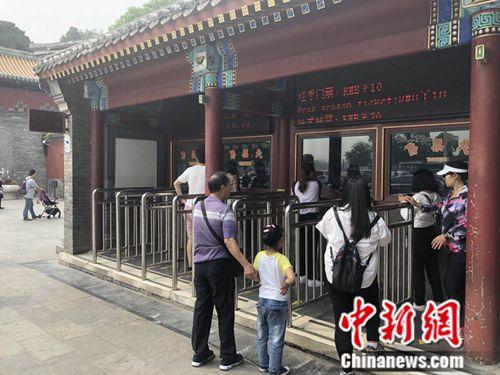
Children’s tickets are controversial based on height.
Recently, the standard of children’s ticket purchase has once again aroused public concern and discussion. Some of them think that the ticket purchasing method based on height is to "punish" the big man in disguise, but at the same time, some people think that it is more convenient and faster to use height as the standard.
Ms. Shi, who lives in Qinhuangdao City, Hebei Province, told the reporter of Zhongxin. com that because she and her lover are relatively tall, her son Huanhuan is over 1.2 meters when he is less than 5 years old, and many free tickets can’t be enjoyed.
"I think it’s quite unfair. It’s not the child’s fault to grow tall." Ms. Shi told the reporter of Zhongxin. com that many children are now free of charge, and they have to buy half-price tickets for fun.
However, some parents also believe that it is reasonable to continue to adopt the height-based ticket purchase method. "I often take my daughter out to play by public transportation and find it convenient to use the height standard. If we adopt the age standard, we can’t take our household registration book with us every time we go out. " Ms Liu, who lives in Beijing, told reporters.
Why is height the standard?
China seems to have a long history of taking height as the standard for children’s tickets, so what are the considerations behind it?
Zhang Dongguang, deputy director of a law firm in Beijing, said in an interview with Zhongxin.com that in the early days of liberation, the household registration system and identity information were not easy to determine, so it was more convenient to look at the height and distinguish and charge according to this.
In some areas of practical operation, taking height as the standard also has more obvious advantages than age.
Take public transportation as an example. According to a bus driver in Beijing, it can be directly judged whether children are within the preferential range based on their height, but if every child has to provide documents to check his age when getting on the bus, it will lead to low efficiency.
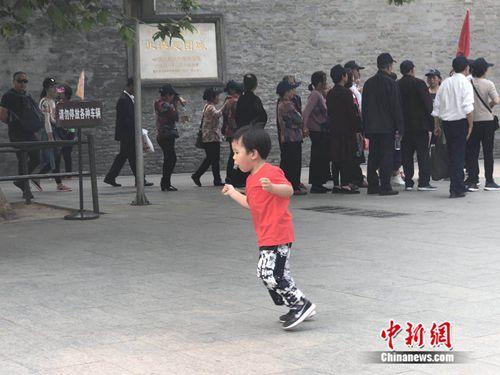
Nearly 70% of parents agree to take age as the standard.
In April this year, China Youth Newspaper Social Investigation Center conducted a survey on 1969 parents of children, which showed that 56.7% of the parents interviewed thought that it was unreasonable to take height as the standard for collecting children’s tickets, and 67.1% of the parents interviewed agreed that collecting children’s tickets should be based on age.
The data also proves the views of these parents to some extent. According to media reports, the data of China CDC show that from 1992 to 2002, the average height of six-year-old urban male children in China increased by 4.9 cm, and in 2012 it increased by 3.7 cm, reaching 1.2 meters. The average height of 12-year-old children has exceeded 1.5 meters, and the average height of 14-year-old children has reached or approached 1.6 meters.
Ms. Beijing folk song is very much in favor of collecting children’s tickets according to their age. In her view, children’s nutrition is better now, and it is not only "outdated" to ask children now according to the previous standards, but also easy to produce contradictions in the process of ticket purchase.
What worries her even more is that when children see that other children can enjoy discounts but they can’t, they will even leave a psychological shadow in their children.
Is it scientific to take age as the standard?
Since nearly 70% of parents are in favor of taking age as the standard, is it scientific to take age as the unified standard?
According to Zhang Baoyi, director of the Institute of Sociology of Tianjin Academy of Social Sciences, the original intention of adopting preferential policies is to create a healthy environment for children’s growth, so no matter what kind of standards, they should be formulated around this original intention.
"Compared with height, it is indeed a better way to adopt age as the standard, which will be more conducive to maintaining a healthy environment for children’s growth and social equity." Zhang Baoyi said.
"The main problem now lies in the operational level. Nowadays, many children don’t apply for identity cards very early, and we can’t ask them to take their household registration books with them when they go out to play. " In Zhang Baoyi’s view, many departments are aware of the irrationality of taking height as the standard, but there is no effective way to solve it at present, so they can only use the old method.
The results of local exploration are hardly satisfactory.
As for the purchase standard of children’s tickets, as early as 2012, the Notice on Further Implementing the Preferential Policies for Youth Tickets issued by the National Development and Reform Commission put forward the youth ticket price policy: children under 6 years old (including 6 years old) or 1.2 meters tall (including 1.2 meters) are free of charge; For minors aged 6 (excluding 6 years old) to 18 years old (including 18 years old), half-ticket is implemented.
In recent years, some places have also explored their own preferential standards for children’s tickets.
For example, in Chengdu, starting from 2017, the free height line for children to take public transportation within the city will be raised to 1.3 meters; For another example, in January this year, the Measures for the Administration of Tickets and Related Services in Scenic Spots in Jiangsu Province issued by the Jiangsu Provincial Price Bureau further clarified that children under 6 years old (including 6 years old) or under 1.4 meters tall (including 1.4 meters) are exempt from tickets with valid identity documents.
But in reality, whether such standards are strictly implemented still needs to be marked with a question mark. According to media reports, Shanghai Oriental Pearl TV Tower, Lingyin Temple in Hangzhou, Taishan Mountain in Shandong and many other famous scenic spots only take height as the standard.
How to determine the standard of children’s discount tickets?
In the public controversy, where will the standard of children’s discount tickets eventually go?
According to Chen Guangjin, director of the Institute of Sociology, China Academy of Social Sciences, both of them have their advantages. If the ticket seller continues to judge by height, it is necessary to constantly improve the height standard line according to the average height of children in China.
"And if age is the criterion, you can make identity certificates for school-age children with reference to the experience of old-age certificates." In Chen Guangjin’s view, although this may bring higher social costs, it is more conducive to protecting children’s legitimate rights and interests.
"But no matter which way you choose, you must insist on giving priority to children’s social welfare." Chen Guangjin said. (End)