Tokyo Sin: Americans Lost in Japanese Culture

Text | Li Qinyu


The director is michael mann, who has filmed The Wire and Miami Vice, starring Japanese tough guy Ken Watanabe, and the elements in the plot include gangs and murders. It is estimated that many viewers will preconceived that "Tokyo Crime" is an action movie with hot scenes and hard contents.

But obviously they will be disappointed. The plot is progressing slowly, the style is serious and dull, and even the characters in the play have a sense of powerlessness, all of which remind us that this drama is by no means a "cool drama". On the contrary, it is a life record that shocks the soul and a unique text that tells about social problems and changes of the times.

After finishing college in Japan, American Jack Adelstam (the prototype of the protagonist Jack) applied for a job and entered the Yomiuri Shimbun, Japan’s largest newspaper (that is, Ming Diao news in TV series), becoming one of the few American journalists who were allowed to enter the mysterious Tokyo Metropolitan Police Department to report crimes. He also wrote this strange life experience into a best-selling book "Tokyo Sin".

This drama, adapted from this, tells the real crime story in Japan from a unique perspective, and also explores the modern gangster world that I rarely see in Japan, indirectly reflecting the complicated and sometimes interdependent relationship among journalists, police and gangsters.


From America to Japan: Living elsewhere


Although this drama has gathered many Japanese first-line movie stars, the most eye-catching one is Jack, who speaks fluent Japanese and is played by Ansel Elgort. This young American actor, who just starred in west side story, stands out among the Japanese and becomes a unique scenery.
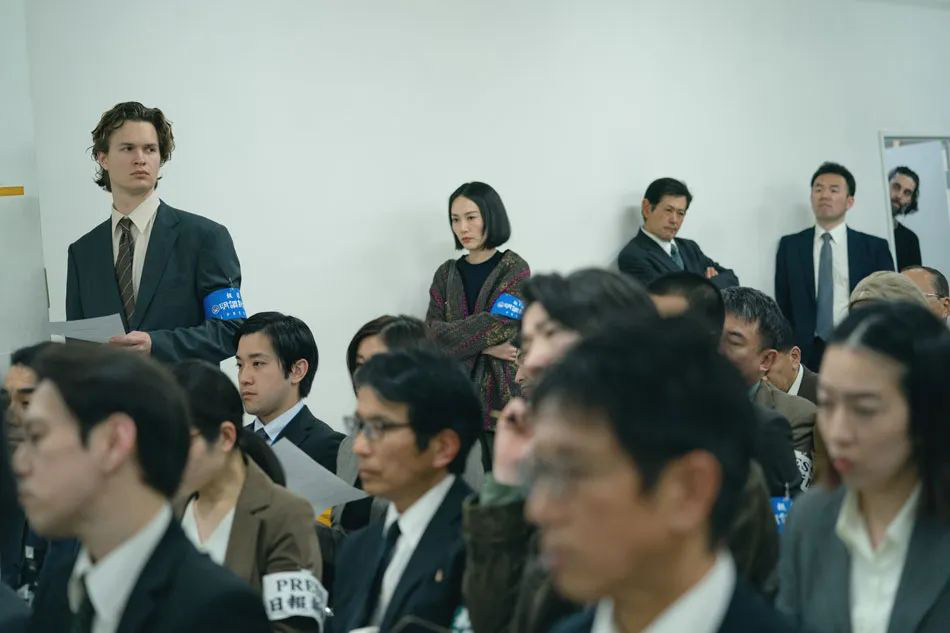
Jack’s relationship with his father is not good, and his sister suffers from depression. He left his hometown and came to Tokyo, Japan, just to start a new life and pursue his dreams. And he did find his spiritual "father" again-Pan Tong, played by Ken Watanabe, who was honest and brave and taught and helped him all the way.

Not only Jack, but also Samantha, the hostess played by Rachel Keller, came to Tokyo to get rid of the unbearable past. These foreign faces in Tokyo are the most obvious metaphor of this play-from the perspective of Americans, going to Japan is more like "living elsewhere."

This is reminiscent of Goethe’s keen interest in China culture, especially China literature, and his mentality of creating "world literature". Frankly speaking, this is not how much Goethe loved China at that time, but the urgent feeling of wanting to obtain fresher cultural resources from the outside when the western world became more and more lifeless.
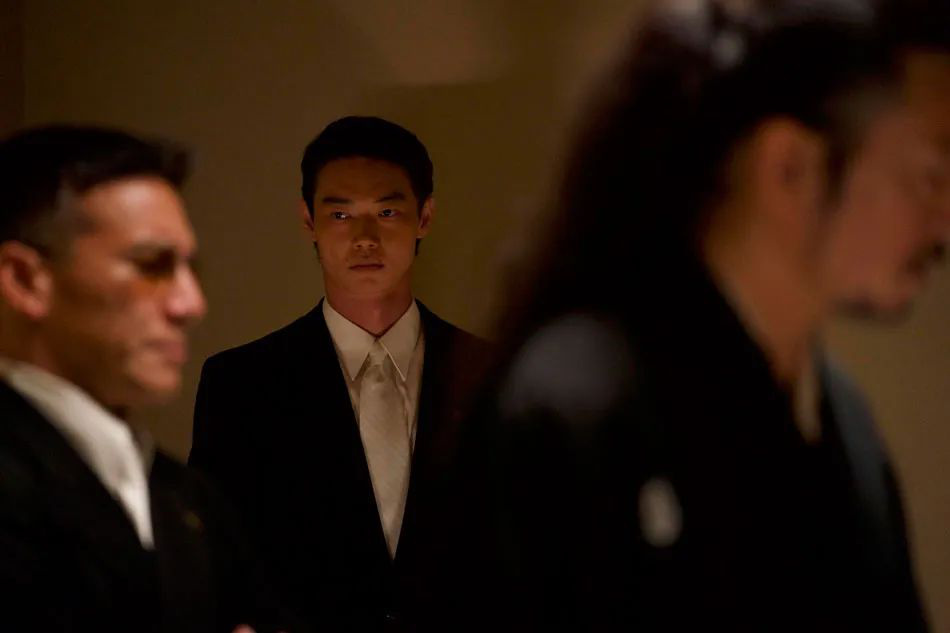
The mysterious and ancient Japanese culture is obviously attractive to "Jack" from America. In Ramen Girl, brittany murphy redeems her failed relationship by learning Japanese food culture. In "Kill Bill", uma thurman showed the American audience the aesthetics of violence. In The Last Samurai, Tom Cruise realized the Zen Buddhism of "nothing originally" and "life and death are all delusional" and the Bushido spirit of self-reliance and self-denial regardless of life and death.

In "Tokyo Sin", the first lesson that Piantong taught Jack was the "ceremony" in Japanese culture. It is by no means the set of values that police officers in the Jianghu Miyamoto uphold that focus on trading and buying and selling (this is precisely American culture), but the "righteousness" advocated by traditional Japanese. It is precisely because of Jack’s journalistic ideal in front of Piantong that Piantong is willing to help him.

In other words, the reason why "Jack" people are so obsessed with Tokyo is not that they are attracted by its sounds, dogs, horses, and traffic (which are all in America), but that they want to pursue new ideals and infinite possibilities here.

Conflict and misunderstanding: guilt culture and shame culture


Although jack was full of hope for his new life, he was hit on the head as soon as he entered the newspaper. The elder Yumi Maruyama warned Jack that he was not qualified to regard her as a "friend", let alone to call her by her first name. This is the important difference between American guilt culture and Japanese shame culture. The "original sin consciousness" produced by guilt culture makes Americans think that since everyone has "original sin", then everyone is equal; But for the Japanese, the root of conscience is the relationship between people, and the root of its culture comes from family relations.

It is clearly stated in Chrysanthemum and Knife that Japan "has a very thoughtful hierarchy in politics, religion, military, industry and other fields. No matter whether it is the upper level or the lower level, it will be punished if it exceeds its privileged scope." Therefore, Jack has to strictly abide by the hierarchy of the newspaper. Even if he finds a breakthrough clue in the report, he must obey the unreasonable orders of his boss (played by Kohsuke Toyohara)-the report must be written according to the police’s notification and cannot have his own creative content.

This also involves the main plot of the play-a series of murders created by the underworld Huze Group. They colluded with banks, used usury to push customers into the abyss of eternal ruin, and then forced customers to commit suicide by insulting and threatening to defraud huge expenses.

Perhaps some viewers will wonder why the Japanese choose to commit suicide after being insulted. This also shows the difference between guilt culture and shame culture in terms of restriction mechanism-the real guilt culture relies on the reflection of guilt in the heart to do good deeds; The real shame culture relies on external coercion to do good deeds. Therefore, in the shame culture, what matters is not what you have done, but whether you have been discovered by outsiders. This is the root cause of the victim’s unbearable humiliation and anger and suicide.

On the other hand, shame requires the presence of outsiders, at least to feel that outsiders are present. In other words, as long as the evil deeds are not discovered, it seems that they can get away with it. This is why police officer Miyamoto told Jack that there was "no" murder in Japan, and Mingdiao News did not support Jack’s further investigation at first. Jack sighed in the bar, "At least there is investigation news in the United States". Behind a complaint, it is the fierce conflict and huge difference between the two cultures.


Lost in Tokyo: An Outsider of Japanese Culture


Milan Kundera said, "Man is the one who walks in the fog." Facing the fog, people can only see the narrow space in front of them. Jack hopes to see the running logic of Tokyo gangs through news investigation, but he doesn’t realize that the power of individuals or even any organization is negligible in the face of the rolling wheel of history.
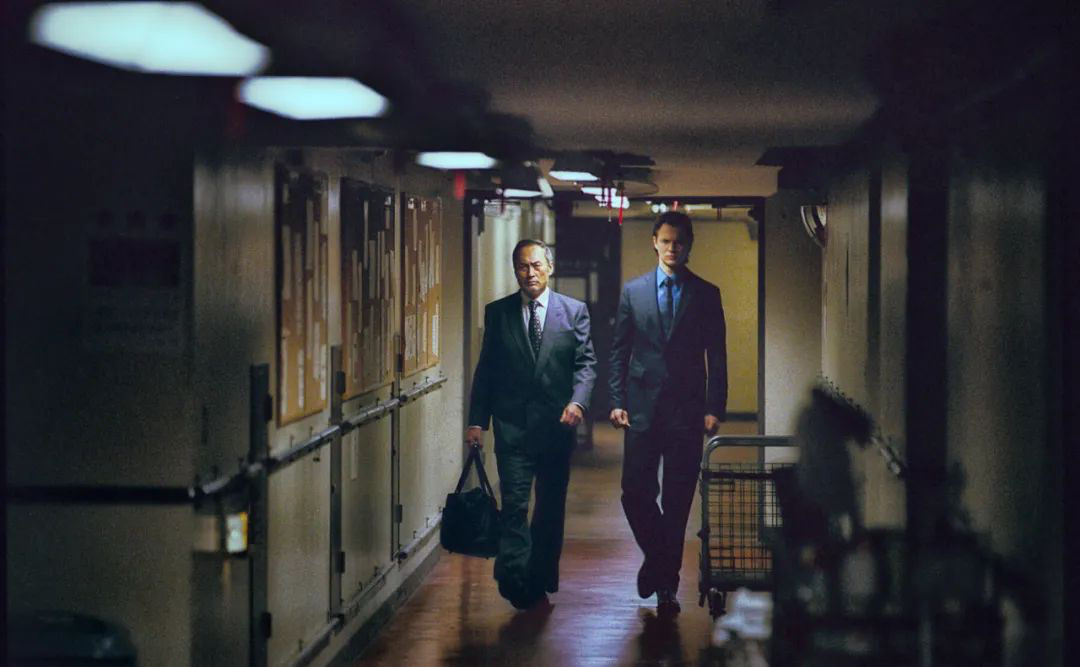
Huze Group and Chihara Group were sworn enemies fighting for territory. Because of Jack’s help, Chihara Group got rid of the mole, but did not dare to take revenge on Huze Group. Officer Piantong advised Ishida, the leader of Chihara Group, "Ten years ago, you could easily take Huze." Ishida’s facial expression was instantly stiff, and his eyes were full of sadness and helplessness.

It turns out that the Huze group has gradually gained the upper hand by drug trafficking and dirty financial scams, while the Chihara group still adheres to the traditional values of "chivalry" and finally retreats step by step. This battle just shows the irreversible decline trend of Japanese underworld.

In the film "Mafia and Family" which was released in 2020 and starred by G Ayano, the declining Japanese gangs even relied on seashore shells to subsidize their families. As American scholar R. taggart Murphy said in his book Japan and its historical shackles, emerging economic systems have spawned brand-new industrial and social structures, the level of industrialization is getting higher and higher, and the era of "speaking with fists" is gone.
Reminiscent that this drama happened at the turn of the century, Jack, an American, will witness in Tokyo the process of reshaping Japanese social life with the changes of the times-"fortitude" and "fortitude" are no longer the criteria for judging men, and "dedication" and "sacrifice" are no longer the qualities that people admire.

In other words, due to the wave of globalization, Jack is doomed to find his ideal country in Tokyo. Whether it’s police officer Piantong or gangster friend Sato, their "loyalty" and "benevolence" will eventually turn into tears of the times and fall on the bustling streets of Tokyo.

By the way, the original work exposes the black-box operations of industries such as human trafficking and obscene transactions organized by violent gangs, and criticizes the Japanese government for failing to protect the "human rights" of hostess, but such views are, after all, on the standpoint of "American centralism".
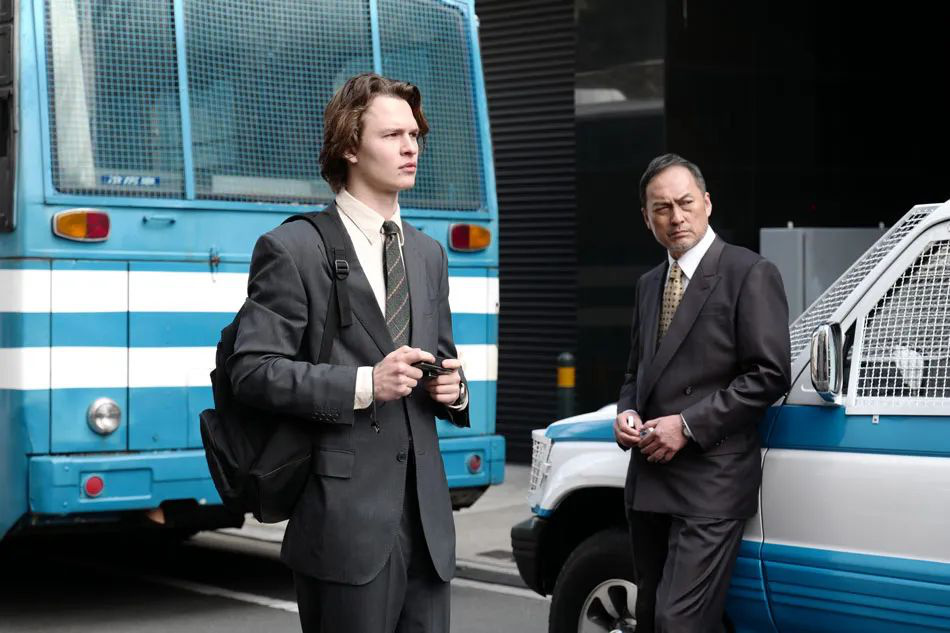
After all, Jack lost in Tokyo can never understand the life choices of Samantha (the hostess gave her the possibility to start a new life) and Sato (the gang gave him a second life), because he is an "outsider" and an "outsider" of Japanese culture after all.

- 
Let children know how to work and love work. How can children’s labor education be upgraded?


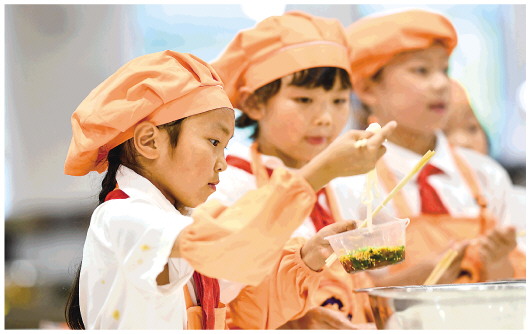
Mixing dough, kneading dough and mixing materials … … A bowl of spicy and delicious Chongqing noodles is out of the pot. On May 26th, in a labor class at Chongguang Primary School in Liangjiang New District, Chongqing, students experienced the whole process of making Chongqing noodles, tasted the delicious noodles made by themselves, and learned new labor skills in interesting activities. Xinhua News Agency reporter Huang Weishe

  Xinhua News Agency, Beijing, May 30 (Reporter Li Shuangxi, Wang Ying, Zhou Chang) "The sun is shining, the rooster sings three songs, the flowers wake up, and the birds are busy dressing up … … To learn from magpies to build new houses, to learn from bees to collect honey, the joy of labor is inexhaustible, and the creation of labor is the most glorious. "

  A children’s song named "The Glory of Labor" is an unforgettable childhood memory of several generations of China children, and it is also the first memory to guide them to work and love work. A few days ago, the Ministry of Education issued the Labor Curriculum Standards for Compulsory Education (2022 Edition). Starting this autumn, the labor course will be officially upgraded to an independent course in primary and secondary schools.

  After the release of the standards, some parents expressed their "support with both hands and feet" for the upgrading of labor education, and some parents were worried about the problems such as lack of teaching AIDS, outdated educational content, high teaching risk and formal evaluation. Will the new labor class be alienated into "parents’ homework and family burden"? Xinhua News Agency reporters conducted an investigation on related issues.

  Marginalization and formalization? The upgrading of children’s labor education needs to be done simultaneously.

  According to the new curriculum standard, the content of labor curriculum is divided into three categories: daily life labor, productive labor and service labor, and there are 10 task groups. The difficulty is also from shallow to deep, from sweeping the floor, washing clothes, raising plants and raising small animals in the lower grades of primary school, mixing cold dishes, heating steamed buns and steamed buns, boiling eggs and dumplings, learning to use small household appliances and paper workers, masons, cloth art, weaving, etc., to making 3-4 dishes independently in junior high school; Simple disassembly, cleaning and maintenance of household appliances; Practice aquaculture and paddy field farming; Familiar with a craft such as pottery, paper, cloth; Experience carpentry, metalworking, electronics, etc. Even experience new technologies such as three-dimensional printing technology, laser cutting technology and numerical control processing technology.

  Parents and teachers in many places said that the new curriculum standard of labor class is rich in content, clear in level, systematic and scientific, and has a clear sense of "upgrading". However, to truly achieve the educational effect of guiding children to work and love labor, the premise is to get rid of some "chronic diseases" that existed in the field of labor education before.

  Some parents are overprotective and overstep their responsibilities. "Children have been in school for six years and have not participated in a campus cleaning. Parents do it for them." Wang Dongming, a citizen of Changchun, said that as a representative of the parents’ committee, he would call parents to work for their children every time the school was cleaned. "Like changing classrooms, moving desks and chairs, making class cards in sports games, looking after items, etc., parents will do the work for these students."

  Some teaching contents are out of touch with labor practice. Guo Xiaolu, a second-grade parent of a primary school in Changchun, told reporters that parents should not only complete all kinds of comprehensive practical activities assigned by the class, but also pose for their children. "When the teacher talks about pure theory in class, let the children go home to cook. How to cut vegetables, fire and use oil? The children have no experience. What should I do if I get hurt? In the end, parents have to do it. "

  Part of the teaching difficulty does not match the student stage. "Sometimes it’s really too curly!" A parent in Hefei said that the school had arranged for junior primary school students to make rocket models by hand. "Children which meeting do rocket model? Parents are not allowed to do it for them. " The reporter also learned that it is not uncommon for parents to choose Taobao to buy handmade finished products to hand in their homework because the manual homework arranged by the school is too difficult, or they are afraid that the quality of the completion is not high enough to be compared with other parents.

  There are still some deviations in the orientation of family education. "If you don’t study hard, you will sell labor in the future." Xu Jing, executive principal of the East Campus of Hefei 168 Rose Garden School, Anhui Province, said that the purpose of experiencing all kinds of labor, especially some manual labor, is to establish children’s correct values of knowing and loving labor, but this has become a negative example for parents to "intimidate" children to study hard in some family education, which seriously affects children’s correct understanding of labor value.

  To implement the new curriculum standard of labor class, we still need to dispel these concerns.

  Some parents, teachers and schools expressed their concerns about the safety, professionalism and complexity of the courses related to the new curriculum standard of labor class.

  Will the difficulty coefficient be too large? Zhang Xuedong, a parent in Changchun, said that if many courses are not operated by professional equipment under the guidance of special personnel at school, parents will not operate them after returning home, such as repairing household appliances, carpentry and metalworking. Many parents have no experience. "Not to mention new technologies like three-dimensional printing, laser cutting and intelligent numerical control."

  Will the risk factor be high? Cooking class needs fire and electricity, and it needs to cut vegetables with a knife; Maintenance of household appliances requires screwdriver and electric welding; Pesticides may also be used to grow vegetables and raise poultry. The new curriculum involves many instruments and articles with high risks and strict control by the school. "What should I do if a student makes an operational mistake during class, resulting in injury to himself or his classmates?" A primary school vice principal in charge of teaching said that "the pressure of school responsibility is very great".

  In addition, a teacher who has been engaged in labor teaching for many years said that taking cooking class as an example, even if teaching is conducted in the school cafeteria, most of the food made by students is not cooked, burnt or the seasonings such as salt exceed the standard, which poses food safety risks. If all of them are dumped, food may be wasted.

  Will the teaching pressure be biased? The reporter found that many local primary and secondary school labor teachers are part-time, and the majors of a few full-time teachers have nothing to do with labor classes. There is no small pressure to complete the systematic and meticulous new curriculum standards. "I am the only labor teacher in the school, responsible for all grades. If you want to start classes according to the requirements of the new curriculum standard, it is really stretched. " A labor teacher who teaches in a public school in Changchun said.

  Optimize safety, curriculum and evaluation, and comprehensively empower labor education to upgrade.

  Education experts and front-line teachers said that the upgrading of children’s labor education can be successfully completed as long as the safety measures, curriculum content, evaluation system and other issues are considered in advance and the system is optimized.

  Safety education is a priority. Wang Wei, director of the comprehensive practice department of Liwang Experimental Primary School attached to Changchun Jida University, said that designing teaching tools, such as ceramic knives or plastic knives for cooking classes, crochet needles for knitting classes, etc., and formulating strict safety operation and teaching procedures for labor classes, and making preventive and emergency plans. "In particular, safety knowledge and precautions should be clearly explained to students before class, and teachers should follow up the care all the time."

  Campus labor world is wide. Fangling Primary School in Shenhe District, Shenyang City has opened up a hundred herbs garden, a hundred flowers garden and a hundred valleys garden in the corners around the teaching building, teaching junior students to plant vegetables and grains, and teaching middle and senior students to plant flowers and Chinese herbal medicines. Gudian Middle School in Fengtai County, Anhui Province has opened a labor practice base "Baifeng Garden" in the school, which is divided into different labor practice activity areas by class, and each class can carry out labor practice activities in a planned and organized way.

  Curriculum design is more scientific. The Second Primary School of Erjing Street in Shenhe District of Shenyang arranges students to learn one of the eight cuisines every semester from the third grade. "By gradually designing the difficulty of cooking courses from shallow to deep, many students can master several specialty dishes in senior grades." Principal Zhang Yan said. Xu Jing said that the East Campus of the 168 Rose Garden School in Hefei, Anhui Province has set up a labor education workshop and a "workshop owner". The school has set up different types of labor classes according to the needs of students of different grades, such as learning to pack schoolbags in junior grades and folding raincoats in senior grades, and combining labor education with education in fine arts, biology and other disciplines.

  The assessment requirements are more pragmatic. Zhang Lihua, a teacher and researcher of labor education in Shenhe District, Shenyang, said that the daily accumulation and the final performance evaluation should be integrated to evaluate the differences. Xu Jing suggested that the relevant departments should provide special training and guidance on the evaluation standards of labor education, which is conducive to the implementation of grassroots schools.

  Excavating teachers is more sufficient. "Teachers are the core engine for the upgrading of children’s labor education." Wang Juan, principal of Fangling Primary School, said that the school appointed teachers majoring in horticulture as full-time labor teachers, and arranged for lecturers from Liaoning University of Traditional Chinese Medicine to come to the school once a week to give lectures on related topics. "Teachers in the school have special skills, and there are professionals outside the school to guide them, forming an energy field that continues to empower children’s labor education."

  Wang Wei suggested that parents should cultivate their children’s labor consciousness from an early age, guide their children to do their own things, and assist parents to do housework as much as they can, so that labor education can achieve the connection between home and school and get twice the result with half the effort.